

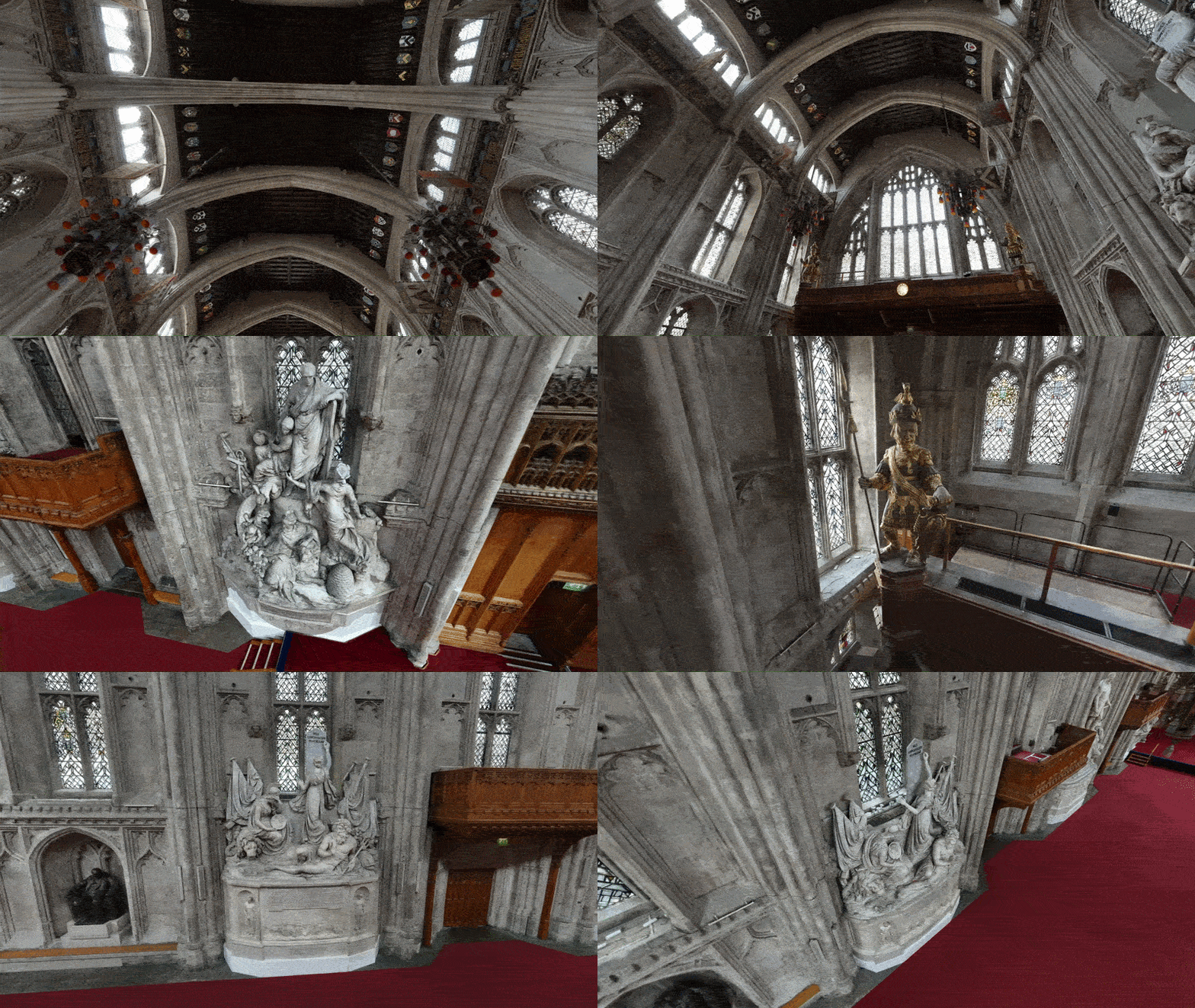
For several months the team at Cradle of English and I have been working on something special, and I am proud to finally share some official news of the multidisciplinary Guildhall 3D project!
Guildhall 3D is the most complete digital 3D record of the interior of the Great Hall at the City of London Corporation’s Guildhall in London, a prime example of layered historical architecture literally festooned with heraldry, statuary, and meaning.
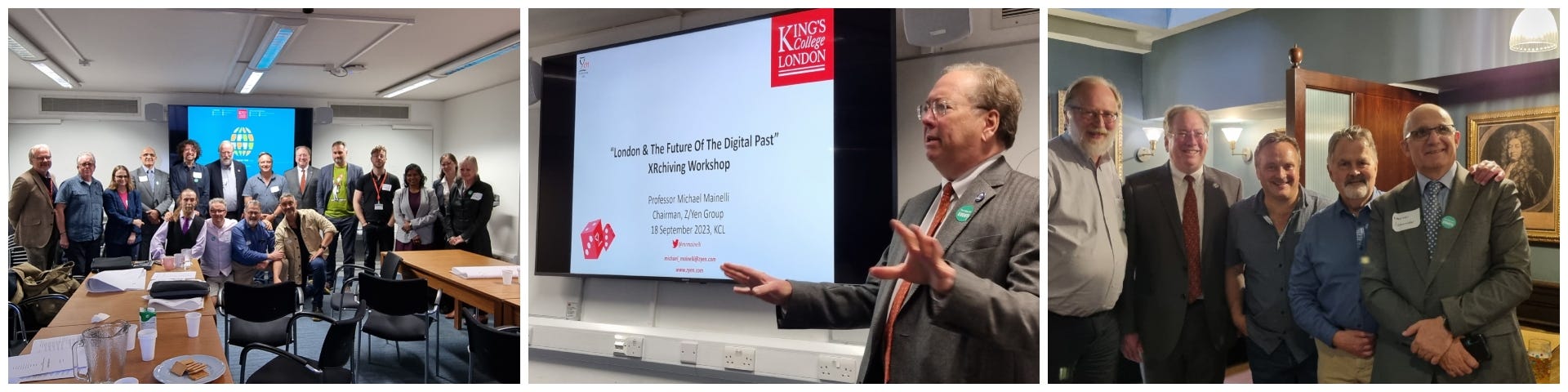
The genesis of Guildhall 3D traces directly back to a workshop at the 2023 edition of XRchiving at King’s College London, where the then newly elected Lord Mayor of the City of London, Prof. Michael Mainelli, unveiled his inaugural vision of a "Digital Coffee House"—an inclusive concept leveraging cultural heritage to foster intellectual growth and international collaboration. Inspired by this vision during the workshop session "The United Kingdom & Europe – Re-forging Links," the proposal first emerged: to digitally document the iconic Great Hall of the City of London Guildhall and submit it as a guest contribution to Europeana and the European Commission’s #TwinIt initiative (more on this below).
Read on for a few details on the diverse aspects of the project—many of which are part of ongoing initiatives—which captures and showcases eight centuries of architectural mastery and London history through high-fidelity spatial scanning.
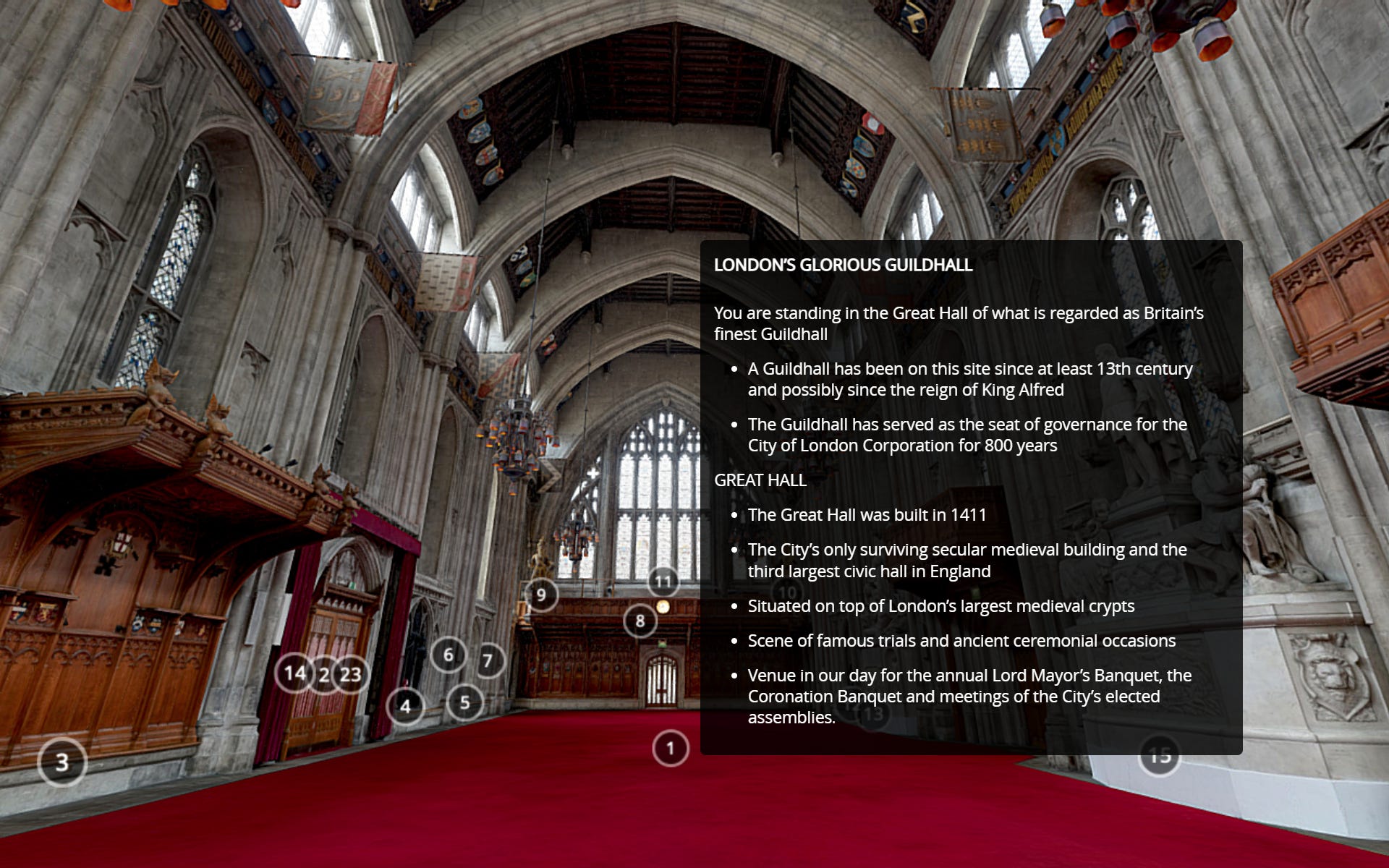
“The Guildhall is a municipal building in the City of London, England. It is off Gresham and Basinghall streets, in the wards of Bassishaw and Cheap. The current building dates from the 15th century; however documentary evidence suggests that a guildhall had existed at the site since at least the early 12th century.” ~ wikipedia.org/wiki/Guildhall,_London
A History First Approach
From the beginning, Guildhall 3D has been primarily about communicating the history of one of London’s most notable venues and telling the stories of the people who have passed between its walls—and the walls buried beneath the current walls—across more than 1,000 years of history. These stories are what make any place, space, or object worth a second look beyond the surface appearance and once mapped onto captured 3D data, elevate that data above a visual resource or into a means of discovering and understanding the historical record.
The task of researching & collating the history of the Guildhall’s Great Hall fell to Tam McDonald, co-founder and CEO of Cradle of English, historian & writer Christopher Winn, and Geoff Browell, Heritage Collections Lead at King’s College London.
The Cradle of English archive team worked closely with City of London Guildhall history specialists to hone in on, from among a great many options, a series of key features of the Great Hall to feature in the initial incarnation of Guildhall 3D. As a result of this activity, a total of 23 historic elements in the Great Hall feature highlight annotations across the 3D scan.
Digitising the Great Hall
My role within Guildhall 3D was to lead all aspects of 3D production for Cradle of English: managing the relationship and expectations of the City of London Corporation, planning and directing the capture, and overseeing publishing of the final data across multiple platforms. The plan from the outset was to provide all raw scan data to the Corporation, plus a set of derivative web-ready files.
2024
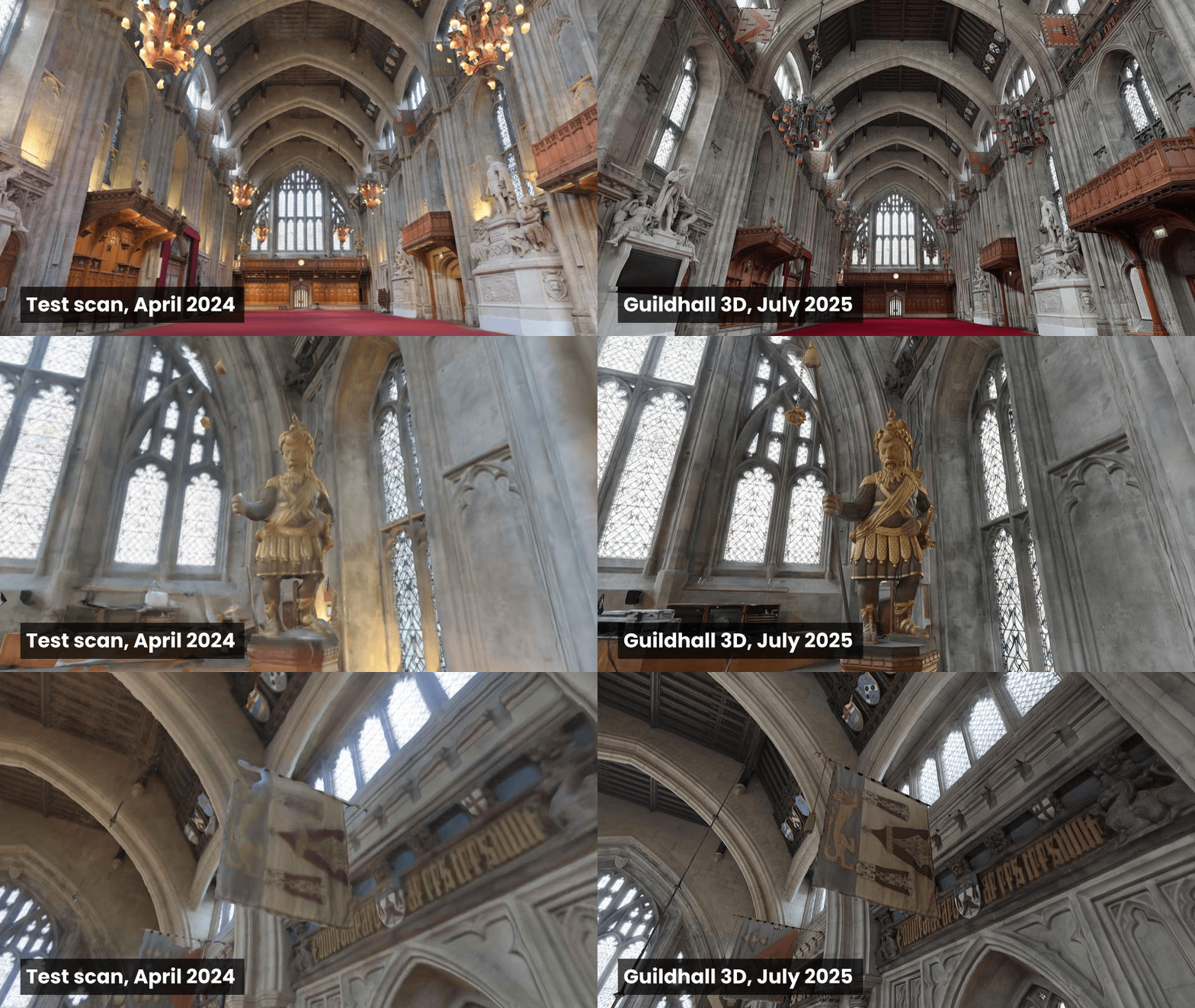
In April 2024, we began initial talks with the Corporation and an initial site visit and draft photogrammetry capture (1909 images from ground level and galleries, Canon G7x, full auto) gave us enough data to pitch our full vision: the highest quality 3D scan of the Great Hall yet created as a gateway to English and global democratic history.
The City of London Corporation is one of the world's oldest continuous forms of municipal government, established centuries before modern voting rights and operating continuously since Anglo-Saxon times. The Great Hall has hosted its elected assemblies for centuries and serves as a physical touchstone for the evolution of civic representation itself…
Creating a draft scan was invaluable in demonstrating the possibilities of 3D data visualisation to the City of London team (see our ‘sizzle real’ above), many of whom were entirely new to the medium. It was during these discussions that contributions from one of our other collaborators Ronald Haynes, University Computer Officer at Cambridge University, were vital in clarifying the many opportunities that 3D digitisation can afford.
The key message was that our draft scan achieved just a fraction of what we could do with a bit more time and money. It wasn’t until April 2025, a full year since our discussions first began, that we would be back on-site to begin capturing the full scale 3D data set.
2025
In some ways the digitisation plan was simple (perhaps deceptively so!): capture both a laser scan and a photogrammetric data set of the space and combine them. Knowing the scope of capture, processing, and project management this required, I assembled a small team of trusted collaborators to deliver it alongside me.
Rob Fanner, David Speare, and Jordan Cutler from the Arts University Bournemouth Innovation Studio were engaged to capture the laser scan. I had gotten to know Rob and the Innovation Studio when I hosted an “Introduction to 3D for Cultural Heritage Professionals & Volunteers” workshop there for local cultural heritage organisations. It just so happened that about the time that I was looking for scanning support that the Studio acquired a Faro Focus laser scanner and I did not want to pass up the chance to work with local collaborators.
David Fletcher, whom I have known since my days at Sketchfab, was engaged to capture the photogrammetry data sets. David has captured an incredible amount of photogrammetry scans from across London, and not least notably has produced some brilliant work for the UK’s National Trust Archaeology.
The assembled scanning team and I knew that we would have to work under several constraints for the scan. We would have very limited time onsite, having to work around the schedule of a busy events venue, and in the end we had less than two days to gather as much data we could of the 153ft long, 85ft high Hall. Additionally, we would have limited access to some areas of the space, either by way of tricky physical access or because we wanted to be cautiously safe while working within a Grade 1 listed building.
Having developed capture plans for both scanning methods, making all necessary health, safety, and insurance checks we were able to begin work.


During the scanning process there were several challenges to be managed including plenty of obstructions and occlusions within the space (banners, chandeliers, window bays, etc.), changeable light conditions (large windows with no coverings), and some mechanical lifting gear being unavailable from the venue. In spite of all this, the team worked hard to capture the best data under the circumstances.


David Fletcher combined the laser scan and photogrammetry data set in RealityScan, with some additional mesh editing roundtrips to Maya and Mudbox. Initial data alignment produced a 200+ million face mesh, which was reduced to 10 million and 2 million face versions, with multiple 8k texture maps. By the end of the process, the initial draft data in no way compared to our final output data:
Alongside the 3D data, we collected relevant metadata regarding the physical Great Hall (rather than the digital 3D model of it) and detailed paradata of our capture process. This, combined with the historical context for the subject, comprises the full data package that can be archived, published, and displayed in various ways.
An Historic (Re)Connection with Europe
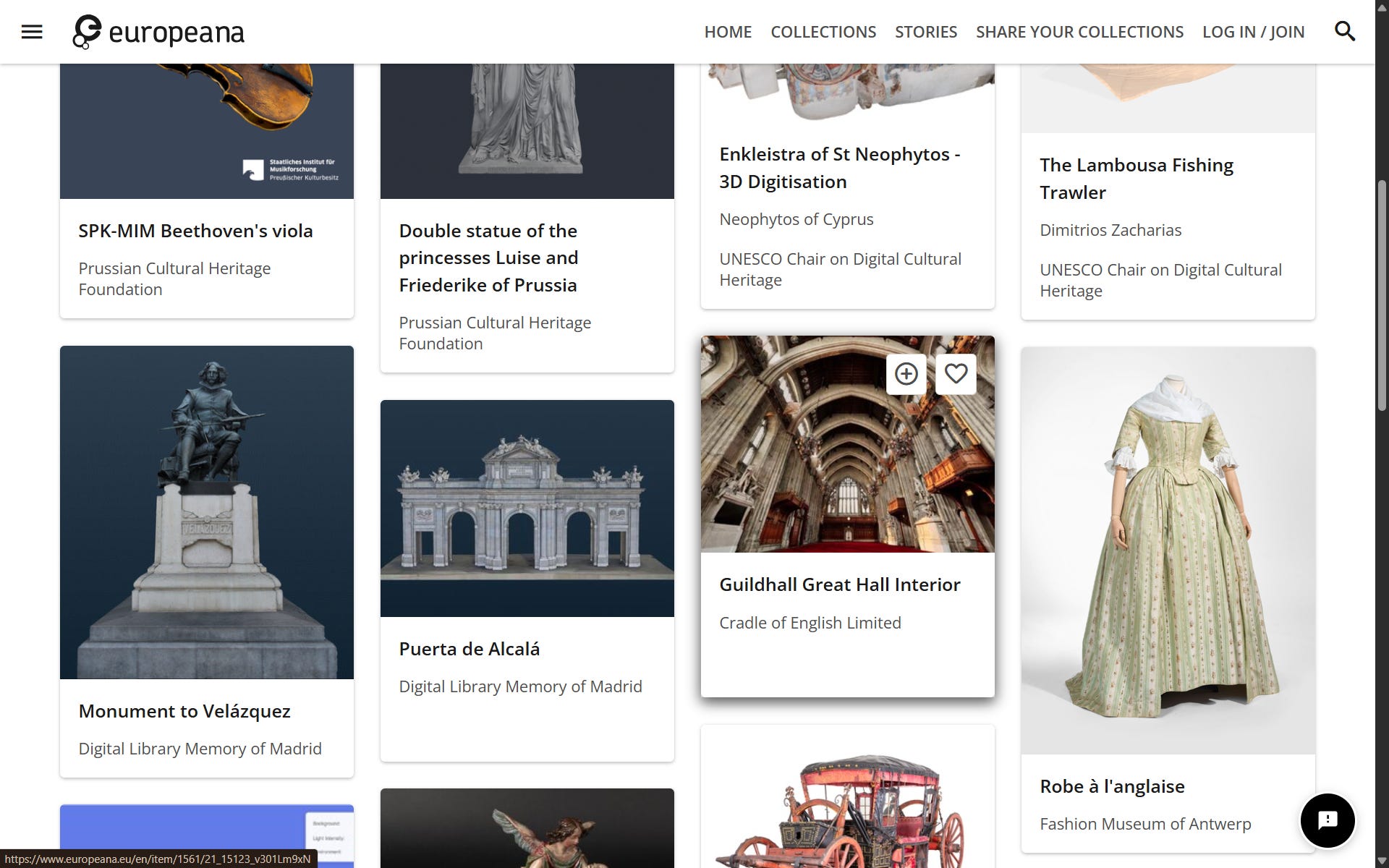
As mentioned at the start of this article, another key component of Guildhall 3D from the outset was that the 3D data would also facilitate a kind of ‘digital diplomacy’ to reconnect the UK with European digital cultural heritage efforts.
If you don’t know, the EU has been funding and developing an enormous amount of digital heritage infrastructure, standards, and professional upskilling, not least of all the European Cultural Heritage Cloud, the 3D Big Data for the Data Space for Cultural Heritage, Eureka3D, and Europeana’s TwinIt! campaign. It is with these last two initiatives that the Guildhall 3D team were able to make good on the initial discussions at XRchiving in 2023. With our European colleagues Marinos Ioannides from the Cyprus University of Technology, and Valentina Bachi and Antonella Fresi of Photoconsortium, we are finally able to digitally place a piece of UK history alongside other incredible 3D data from across Europe.
Why this matters
Including the Guildhall 3D model in pan-European initiatives like EUreka3D and the TwinIt! campaign ensures that this historic space remains integrated within a shared, borderless digital landscape—in spite of the UK’s problematic decision to leave the EU ten(!) years ago.
On a practical level, this ongoing collaboration allows us to maintain interoperability with continental frameworks and champion the "memory twin" approach—ensuring the Guildhall's 3D geometry is preserved alongside the crucial stories, metadata, & paradata that situate it in a historical context.
Beyond the technical benefits of shared open-source tools and data standards, participating in these broader networks serves as an important form of cultural diplomacy. It demonstrates that despite shifting political realities, our commitment to collaboratively preserving and contextualizing Europe’s collective digital heritage remains steadfast!
“This milestone represents more than technological excellence. It is a powerful example of what can be achieved through shared vision, trust, perseverance and international cooperation. It reaffirms that cultural heritage remains a common European legacy that transcends political boundaries and continues to unite researchers, institutions and citizens across Europe and beyond”.
Marinos Ioannides, UNESCO Chair on Digital Cultural Heritage MNEMOSYNE, Cyprus University of Technology
Virtual Production at Open University
While the Guildhall 3D data serves as a standalone educational asset online, the Cradle team and I are eager to maximize its reuse. Naturally, we jumped at the chance to test our 3D models and historical texts in a virtual production environment at one of the UK’s leading educational institutions.
Fridolin Wild, a long-time Cradle of English collaborator and Professor at The Open University’s (OU) Institute of Educational Technology, has long recognised the educational power of spatial data. Fridolin, along with Digital Learning Specialist Gerard O’Malley, Head of the XR Studios and New Learning Technologies Matthew Moran, and the OU’s new virtual production team, recently hosted us at OU’s Milton Keynes campus. Together, we explored integrating the Guildhall data into their Unreal Engine-based studio, exploring their green screen, LED volume stages, and 4D volumetric capture process.
Scaling 3D Production with Teleport
Having captured such a valuable 3D dataset, I was keen to explore using the same data to produce a Gaussian Splat (3DGS) as well. I reached out to Teleport by Varjo about trying out their cloud processing pipeline and a little while later Sebastian Grigore, their Head of Growth got back to me.
What began as a quick chat about the possibilities of 3DGS in the cultural heritage space grew into a neat case study: a chance for Teleport to work with some real-world data, and a chance for us to evaluate Teleport’s processing power. The team at Teleport took around 50% of our 8,500 image set and ran it through their pipeline to produce markedly useable 10 million and 5 million splat files—all without our having to touch a piece of software or hardware. With Cradle’s plans to capture many more historic London venues in the future, Teleport offers an ideal way to address scaling 3D processing needs.
You can read more about the collaboration in the case study here and view the raw splat on Teleport here.
Having the Guildhall 3D data in 3DGS format lets the Cradle of English team explore several platforms for publishing our data and reaching new audiences. You can now find versions of the annotated 3D data on the following platforms:
As a creator, it has been an interesting experience comparing how all of these platforms approach similar tasks like splat editing, optimisation and LODs, and essential features like descriptions and annotations. Metadata especially is the key element that must necessarily travel alongside and be presented with 3D data as it is disseminated across platforms to fulfil its potential as a digital cultural artifact.
Exploring AI with sojen.io
The ongoing partnership between Cradle of English and AI-powered world-building platform Sojen brings together heritage storytelling and artificial intelligence to conceive Immersive London, a digital hub designed to bring the city’s history to life. Guildhall 3D serves as a live, foundational dataset for this initiative. Combining 3D scanning and spatial audio, Immersive London will deliver high-resolution digital walkthroughs of London’s historic spaces, starting with the Guildhall itself, establishing the spatial and visual backbone of the platform.
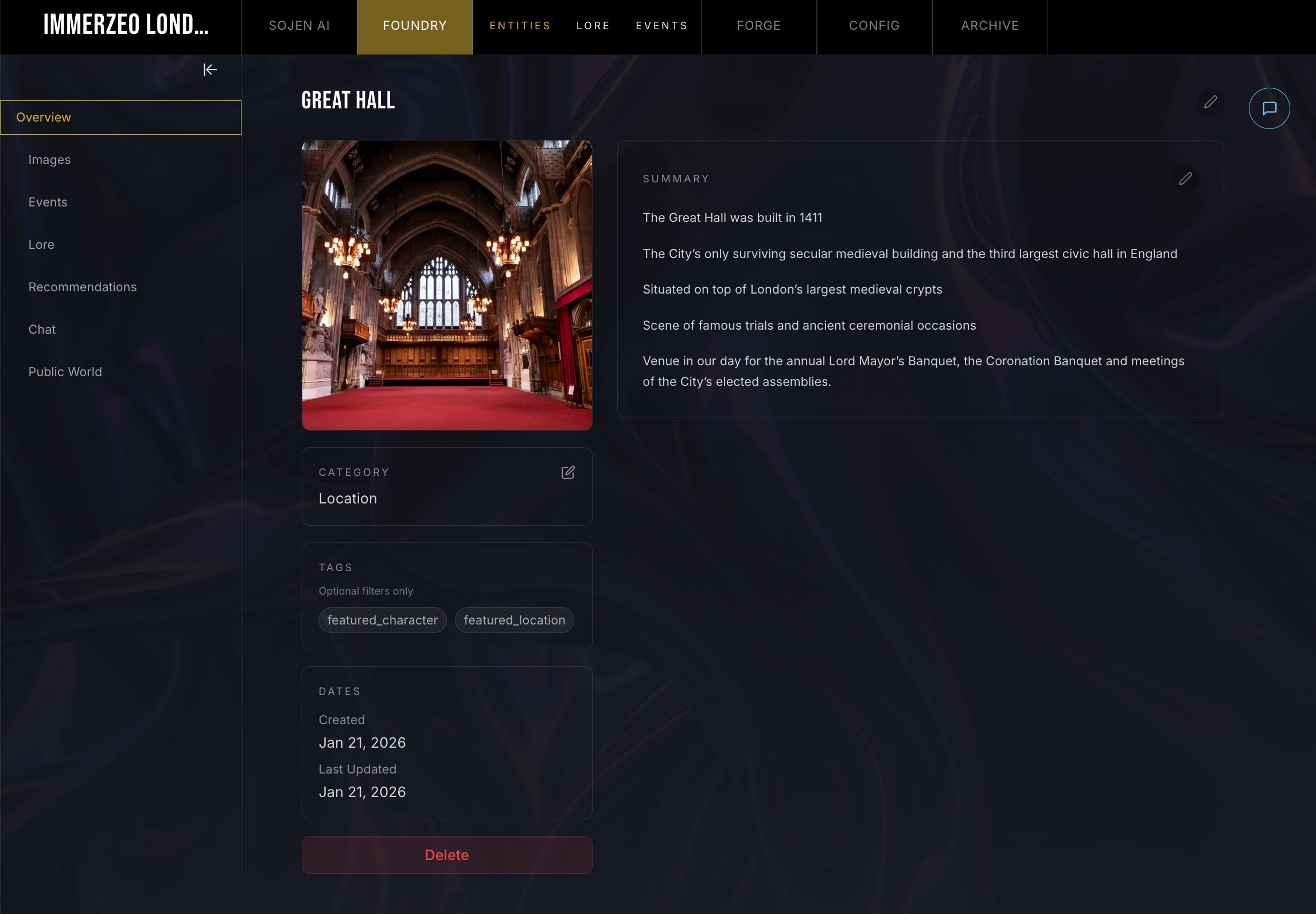
Cradle of English provides the historical expertise, archival media access, and 3D digitisation framework; Sojen supplies the narrative AI engine that brings these digital assets to life. Developed by product strategist, tech writer, and AI developer Doug Thompson, Sojen’s narrative operating system and character engine will populate the Guildhall 3D environments with interactive AI historical figures and virtual tour guides trained on period sources. Pairing the spatial platform with Sojen’s AI-assisted storytelling flywheel turns static 3D scans into interactive walkthroughs, podcasts, and conversational educational experiences.
Keeping AI Grounded in History
But that flywheel only works if it’s fed the right material. As mentioned at the top of this article, the whole point of Guildhall 3D - the 23 annotated historic elements, the paradata, the months Tam, Christopher, and Geoff spent collating the historical record - is to establish a rigorous, vetted foundation of historical knowledge. Any AI character or narrative generated from that data is only as trustworthy as the research beneath it. The approach with Sojen is deliberately one-directional: the vetted historic research constrains and grounds what the AI can say and do, not the other way around. The Cradle of English team reviews and approves the source material that trains each virtual guide before it ever “speaks,” and the AI isn’t permitted to improvise historical claims beyond what’s been documented. AI can make the Guildhall’s history more accessible and more alive—but it can never be allowed to quietly rewrite it. Novel engagement, yes; distorted history, never.
If you are interested in collaborating with Cradle of English on a similar venture, please drop us a message.